
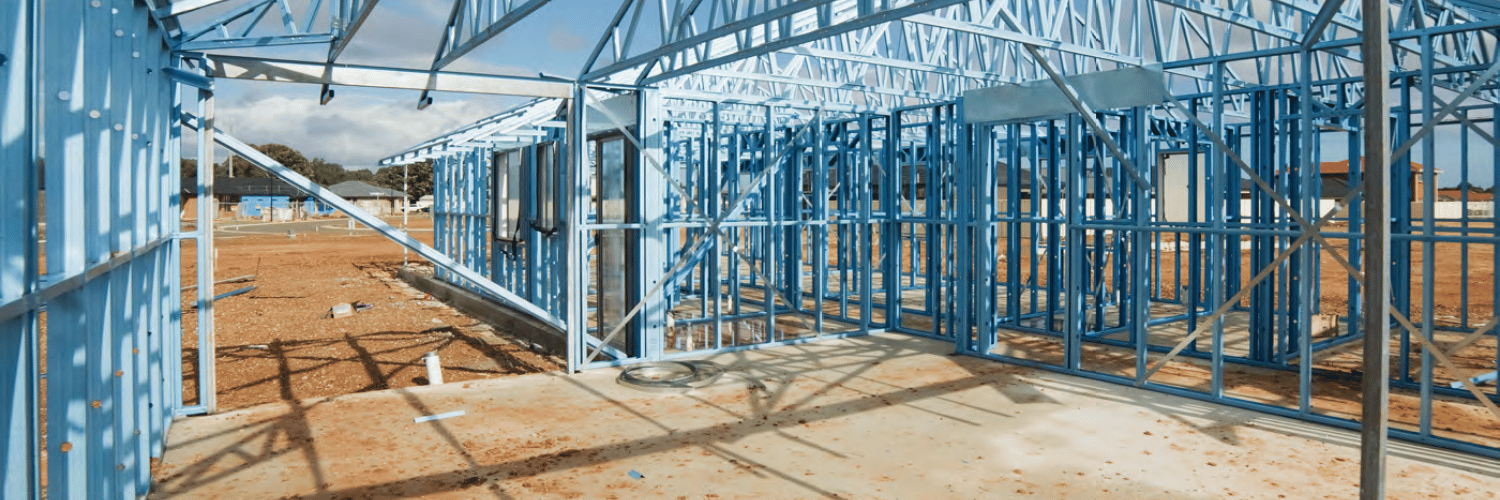
Why More QLD Builders Are Taking a Serious Look at Steel Framing
Durability, climate performance, and long-term structural stability are driving interest in steel framing for residential construction.
Time for change
Timber has long dominated residential framing, but across Queensland more builders are reassessing their options. Climate conditions, termite exposure, and long-term structural stability are pushing steel framing into serious consideration.
Unlike timber, steel is non-combustible, termite resistant, and dimensionally stable. In regions with high moisture variation and pest pressure, these factors are increasingly influencing builder and client decisions.
Globally, the construction industry is seeing gradual movement toward prefabricated and steel-based framing systems, driven by material consistency and long-term durability. In Australia, this trend is still evolving, but awareness continues to grow.
Compliance remains a key driver. Structural framing must meet NCC requirements and relevant engineering standards, and builders must ensure framing systems align with design and load specifications. Steel framing can provide consistency in performance when engineered and installed correctly.
Atlas Frames provides locally manufactured steel framing solutions backed by experience and practical builder support. Their approach focuses on accuracy, reliability, and clear coordination during the framing stage.
For builders looking at long-term performance, steel framing is no longer niche, it is becoming part of the broader residential construction conversation.
ACCESS MORE ON THE MEMBER PORTAL
Not yet a TAG member?
Join the fight for better prices and service today!